
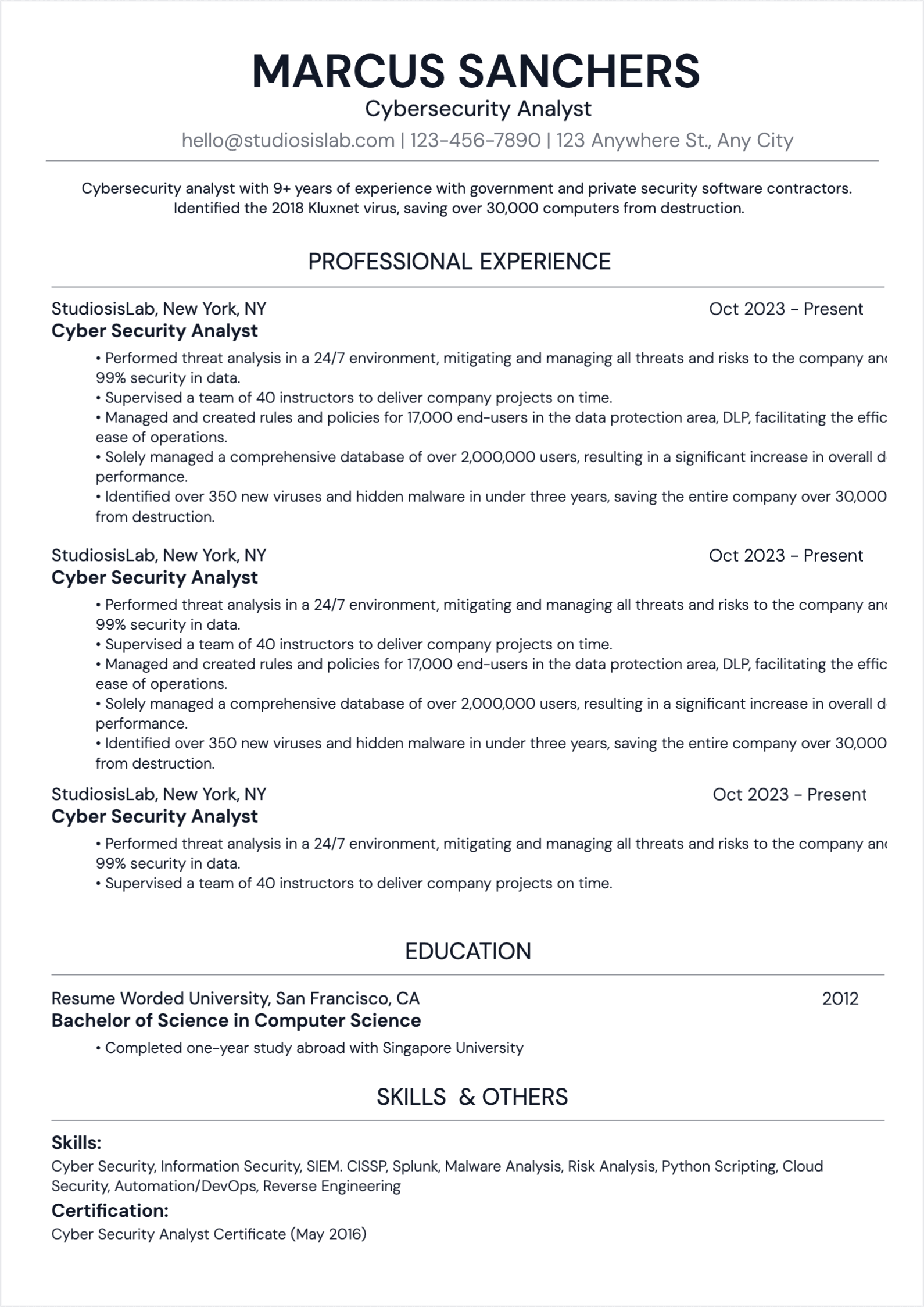
Cybersecurity Analyst Resume Template
Cybersecurity roles require a resume that demonstrates technical depth and practical risk reduction. This template helps you present incident response, monitoring, and control implementation in a way that security teams can evaluate quickly.
Who this resume is for
- Cybersecurity analysts in SOC, detection, and incident response roles.
- IT professionals transitioning into security analyst positions.
- Candidates with hands-on SIEM, vulnerability, and log analysis experience.
- Analysts applying for roles tied to compliance and security operations.
What to include
- Security summary with focus areas such as monitoring, threat analysis, or response.
- Hands-on tools and platforms like SIEM, EDR, IAM, and vulnerability scanners.
- Incident response examples with timeline, severity, and remediation outcomes.
- Security controls, policy enforcement, and audit or compliance contributions.
- Certifications such as Security+, CEH, CISSP, or cloud security credentials where relevant.
ATS tips
- Use exact skill terms from postings, including SOC, SIEM, incident response, and threat intelligence.
- Include both technical controls and governance language when role requires both.
- Expand acronyms at least once for ATS readability.
- Use clear chronology for security roles and projects.
Resume writing tips
- Show what threats you handled and how your actions reduced risk.
- Balance technical detail with business impact and communication.
- Highlight collaboration with IT, compliance, and leadership teams.
- Use concise bullets that emphasize ownership and outcomes.
Related resume templates
FAQ
Should I include a home lab on a cybersecurity resume?
Yes, if it demonstrates practical skills relevant to the role and you can explain your setup and findings clearly.
Are certifications enough without experience?
Certifications help, but pairing them with projects, labs, or internship work gives recruiters stronger evidence of readiness.
How do I show incident response work on a resume?
Summarize the incident type, your role, tools used, and the remediation or prevention outcome.